Lean Phase vs Dense Phase Pneumatic Conveying
Which Pneumatic Conveying Technology is Right for Your Application?
One of the most common questions asked during system selection is whether Lean Phase Conveying or Dense Phase Conveying is the better solution.
The answer depends on material characteristics, conveying distance, capacity requirements, product sensitivity, operating costs, and plant objectives.
Lean Phase Conveying
Lean phase conveying transports material at higher air velocities where particles remain suspended in the conveying air stream.
Advantages
- Lower capital cost
- Simpler system design
- High conveying rates
- Flexible installation
Typical Materials
- Flour
- Starch
- Sugar
- Milk Powder
- Plastic Granules
Dense Phase Conveying
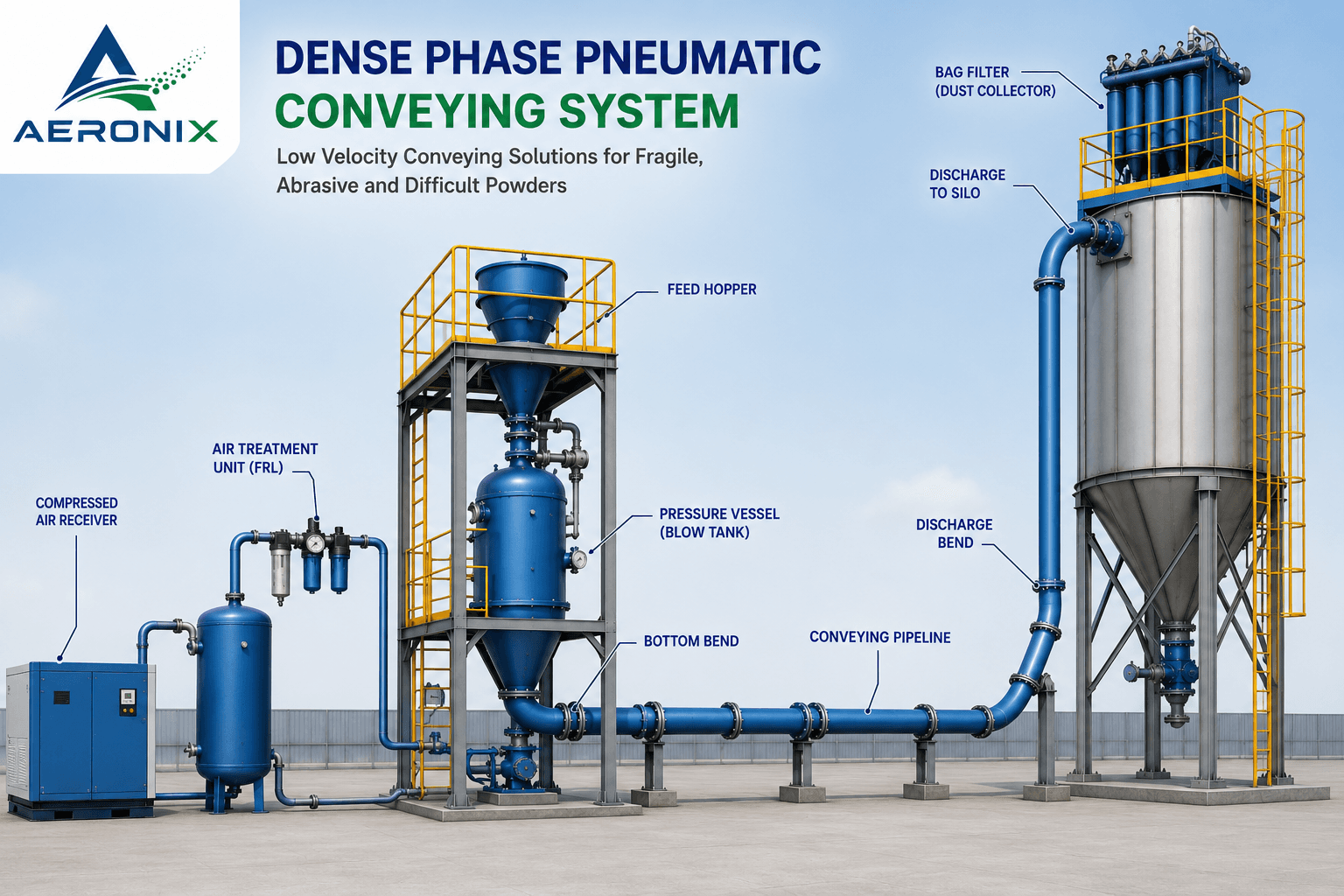
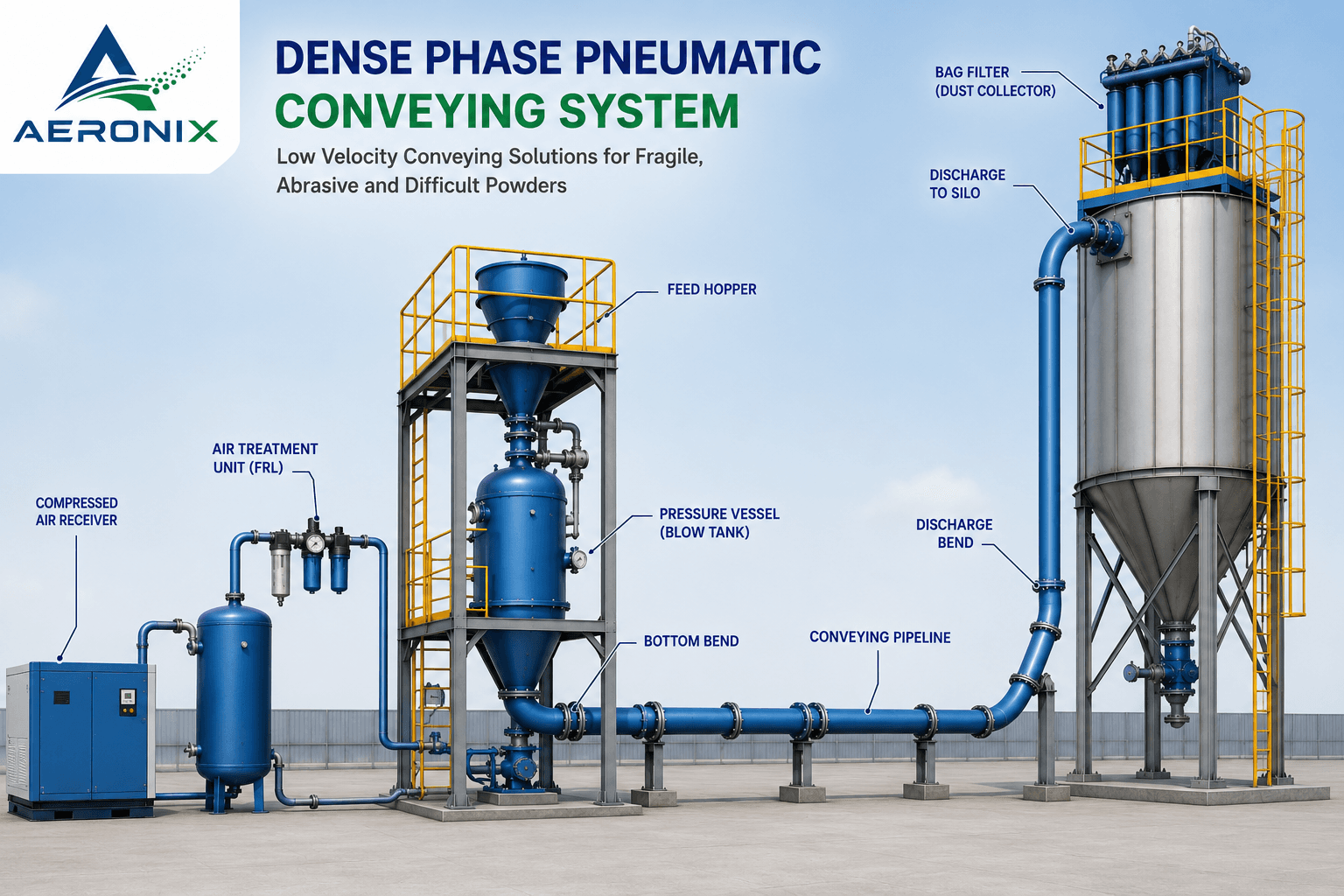
Dense phase conveying transports material at lower velocities using higher operating pressure.
Material moves through the pipeline in plugs or dunes, reducing product degradation and wear.
Advantages
- Lower pipeline wear
- Reduced product degradation
- Lower maintenance
- Better for abrasive materials
Typical Materials
- Carbon Black
- Fly Ash
- Talc
- Calcium Carbonate
- Titanium Dioxide
Comparison
Parameter
Lean Phase
Engineered for Reliability
Dense Phase
Velocity
High
Low
Pressure
Low
High
Product Degradation
Higher
Lower
Wear Rate
Higher
Lower
Capital Cost
Lower
Higher
Operating Cost
Moderate
Lower (for some applications)
Which System Should You Choose?
The correct choice depends on:
- Material Characteristics
- Capacity Requirements
- Conveying Distance
- Product Sensitivity
- Plant Layout
- Budget
AERONIX evaluates each application individually to recommend the most suitable technology.
Need Help Selecting a System?
Contact AERONIX Systems LLP to discuss your material, process requirements, and production objectives.
Need Technical Assistance?
Our engineering team is ready to analyze your material and recommend the perfect handling solution.
Request a QuoteRelated Solutions
Engineered for Performance.