Pneumatic Conveying System FAQs
1. What is a pneumatic conveying system?
A pneumatic conveying system transports powders, granules, pellets, and bulk solids through pipelines using air or gas as the conveying medium.
2. What are the types of pneumatic conveying systems?
The main types are Lean Phase Conveying, Dense Phase Conveying, Vacuum Conveying, Pressure Conveying, and Closed Loop Conveying Systems.
3. What is the difference between lean phase and dense phase conveying?
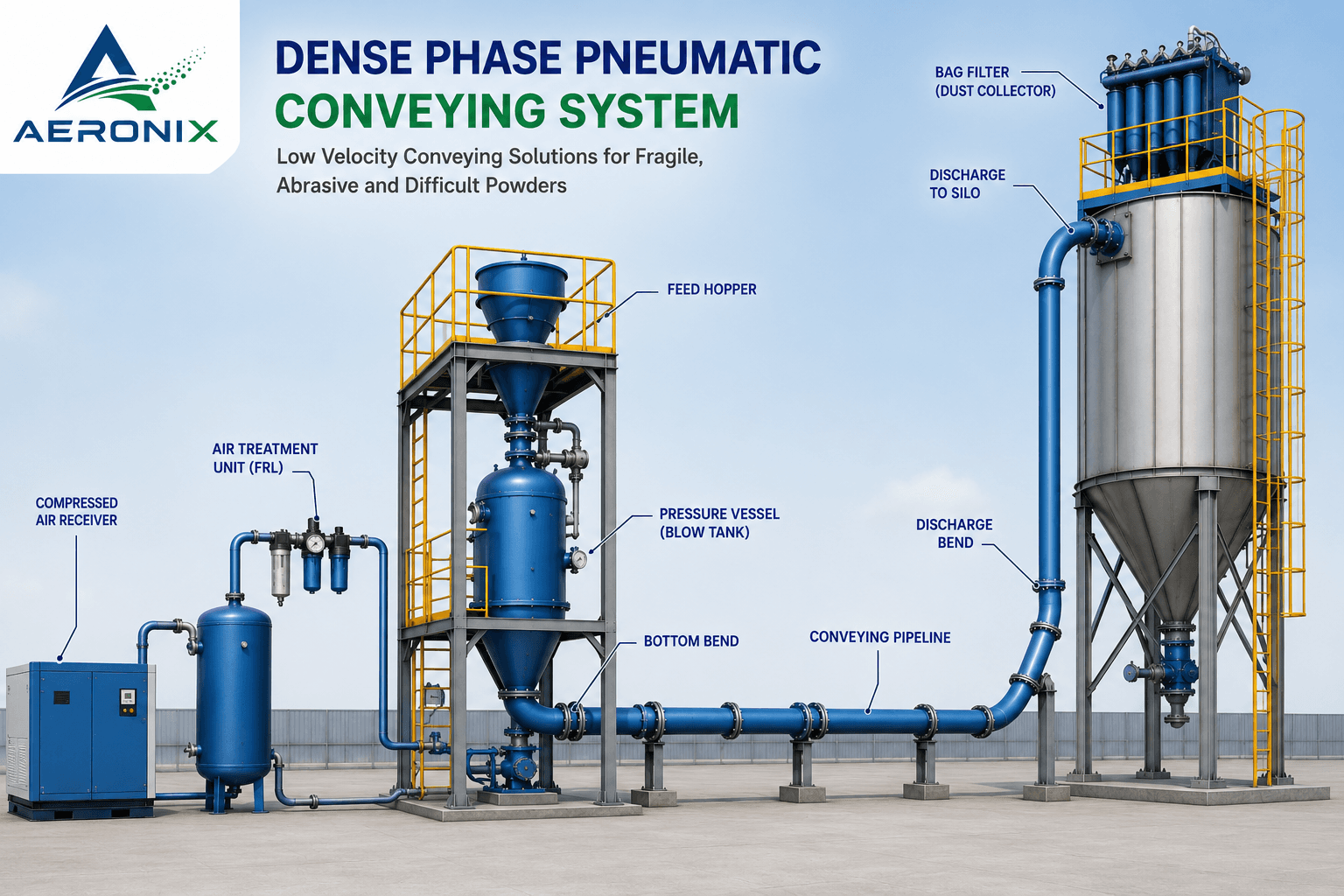
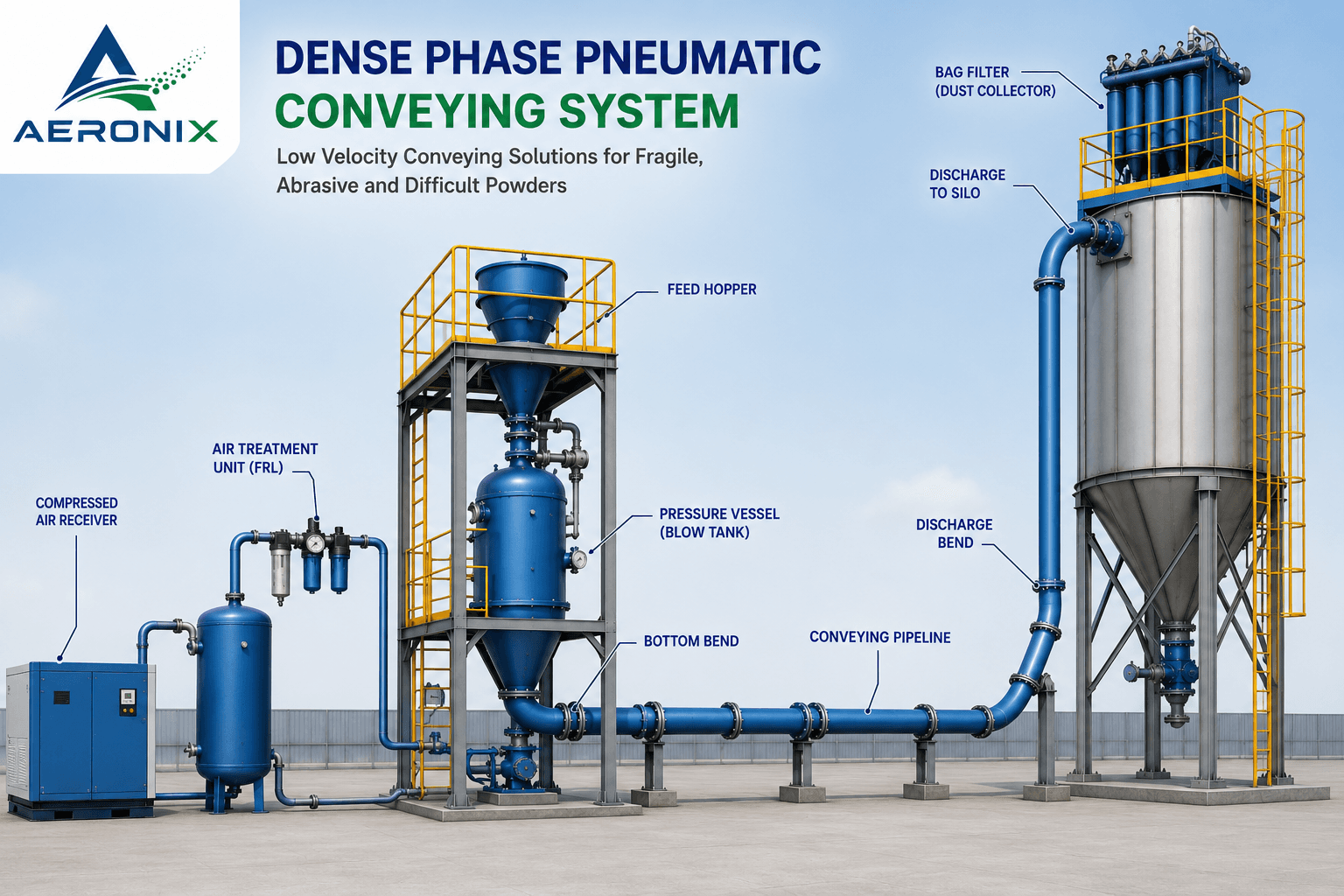
Lean phase uses higher air velocities while dense phase uses lower velocities and higher pressure for gentler material handling.
4. Which materials can be conveyed pneumatically?
Flour, starch, sugar, milk powder, PVC resin, carbon black, calcium carbonate, talc, pigments, fly ash, and many other powders and granules.
5. What are the advantages of pneumatic conveying?
Dust-free transfer, flexible routing, reduced contamination, lower manual handling, and improved automation.
6. How far can a pneumatic conveying system transport material?
Distances vary from a few meters to several hundred meters depending on material characteristics and system design.
7. What is conveying velocity?
It is the speed of air inside the conveying pipeline required to transport material.
8. What causes pipeline blockage?
Low air velocity, poor system design, material build-up, excessive moisture, or incorrect feeding.
9. Can abrasive materials be conveyed pneumatically?
Yes. Dense phase conveying is often preferred for abrasive materials.
10. Is pneumatic conveying suitable for food applications?
Yes. Hygienic food-grade designs are widely used in food processing industries.
11. What is a vacuum conveying system?
A vacuum conveying system transports material using negative pressure.
Engineered for Reliability
12. What is a pressure conveying system?
A pressure conveying system uses positive air pressure to move material through pipelines.
13. What is a closed loop conveying system?
A system that uses inert gas instead of air for oxygen-sensitive or hazardous materials.
14. Which industries use pneumatic conveying?
Food, dairy, pharmaceutical, chemical, plastic, mineral, pigment, recycling, and battery material industries.
15. What factors affect pneumatic conveying design?
Bulk density, particle size, moisture content, conveying distance, capacity, and material characteristics.
16. What is saltation velocity?
The minimum air velocity required to keep material moving without settling.
17. Can multiple destinations be connected?
Yes. Diverter valves and automation can direct material to multiple locations.
18. How is air separated from material?
Using cyclones, filters, receivers, or dust collection systems.
19. Can existing systems be upgraded?
Yes. Existing conveying systems can often be modified for improved performance.
20. How do I select the right conveying technology?
Selection depends on material properties, distance, capacity, product sensitivity, and budget.
21-25.
Common questions on pressure drop, blower selection, energy consumption, maintenance, and troubleshooting.
Need Technical Assistance?
Our engineering team is ready to analyze your material and recommend the perfect handling solution.
Request a QuoteRelated Solutions
Engineered for Performance.